20 September 2025
saas

Eliminating $15M Renewal Leakage

Introduction
Setting the context
A leading financial services company was facing annual renewal leakage of over $15M due to fragmented contract ownership, lack of visibility into renewal timelines, and auto-renewals triggered without procurement involvement. The leadership team needed a way to regain control of contract renewals and stop money from slipping through the cracks.
Problem
Auto-renewals + Visibility Gaps
Intervention
Renewal Calendar + Governance
Outcome
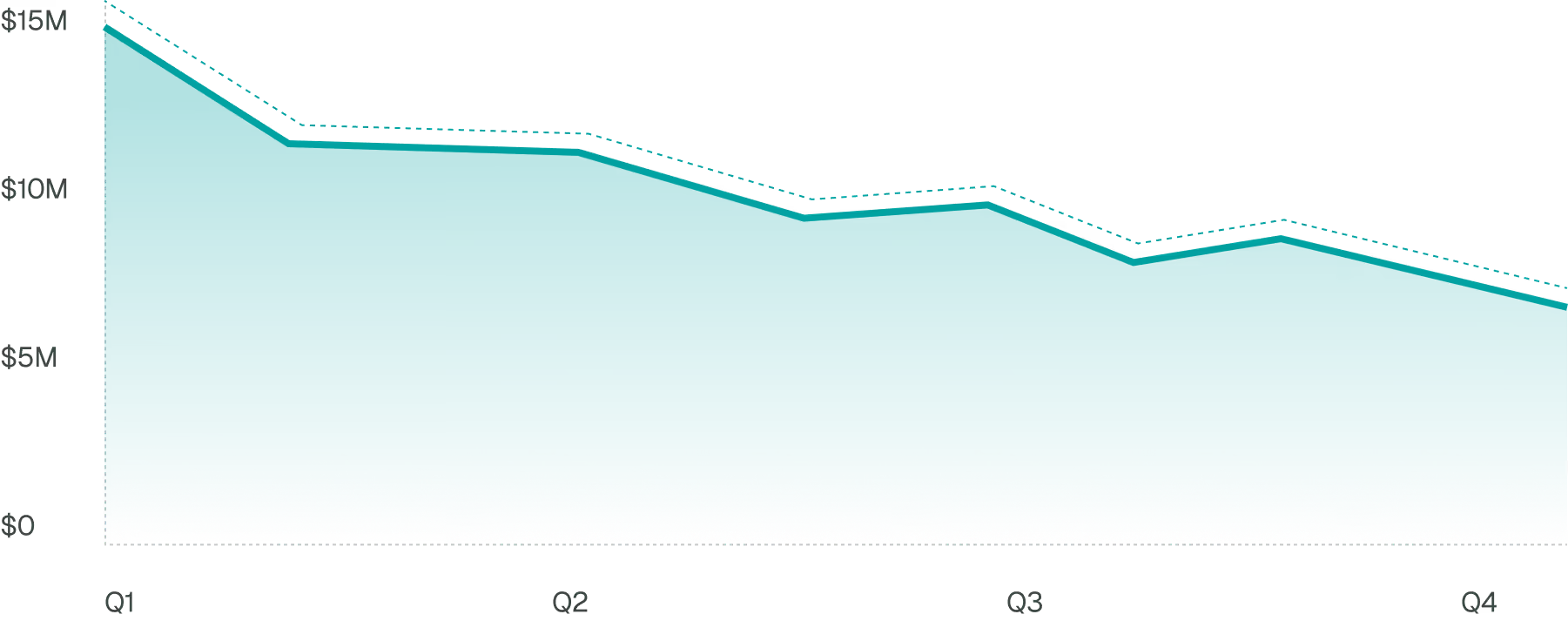
$15M Saved, Leakage near zero
The Hidden Cost of Renewal Neglect
Background Information
Our client, a leading financial services institution, discovered a troubling pattern: millions of dollars were silently draining from their bottom line each year through unmanaged contract renewals.

Without a centralized system to track renewal dates and obligations, auto-renewal clauses were triggering across their vendor portfolio—locking them into unfavorable terms and eliminating any opportunity for renegotiation.

The visibility gap meant that by the time procurement teams learned of upcoming renewals, the window for strategic action had already closed. Leadership recognized this wasn't just a process problem—it was a governance failure demanding systematic intervention.
engagement snapshot
Industry
Technology
Industry
SaaS renewals + contract terms + governance
Goal
Optimize spend + reduce operational risk
The Challenge
Fragmented renewals created financial and operational risk

Auto-renewal exposure driving silent cost rollovers
Contracts with automatic renewal clauses were renewing without review, locking the organization into outdated pricing and terms.
Continued exposure meant an additional $5M+ in unnecessary spend each renewal cycle.
Limited visibility into obligations and renewal dates
Renewal dates were scattered across spreadsheets, emails, and individual memories—no single source of truth existed.
Without visibility, strategic sourcing events couldn't be scheduled, eliminating leverage.
Last-minute negotiations with low leverage
When renewals were finally discovered, there was insufficient time to run competitive processes or negotiate meaningful concessions.
Rushed decisions consistently resulted in accepting vendor-favorable terms.
The approach
Building a renewal operating system
A four-pillar playbook to transform renewal chaos into strategic control.
Build a proactive renewal calendar
Map all contract renewals into a centralized system with automated alerts 90, 60, and 30 days before key dates.
Embed governance rules
Define clear ownership, approval thresholds, and escalation paths for every contract tier.
Add risk alerts
Flag unfavorable clauses, auto-renewal traps, and price escalation terms early in the review cycle.
Lead targeted renegotiations
Leverage advance notice to run competitive processes and reset commercial terms.
Renewal Risk Heatmap → Governance Workflow
risk signals
Auto-renewal clause
High-value contract
Unfavorable terms
No owner assigned
triggered actions
90-day alert sent
Owner notified
Approval workflow
Renegotiation started
Key Outcomes
Measurable impact delivered through systematic SaaS governance
The approach
$15M
Annual Renewal Leakage elminated
Target Achieved
Near Zero
Renewal leakage after 12 months
Governance
Proactive
Renewal calendar + rules embedded
Renewal Leakage Over Time
Additional Impacts
Complete visibility into renewal portfolio within 60 days
Governance framework adopted across 200+ vendor contracts
Average of 12% cost reduction on renegotiated contracts
Zero auto-renewal surprises post-implementation
Locations
Chicago
New Jersey
London
Bengaluru
© 2023 — Copyright